


Inhale, Exhale and the Space in Between, 2020
개인전 <일곱 번의 일주일>, 2022
개인전 <흰 바람벽이 있어>, 2021
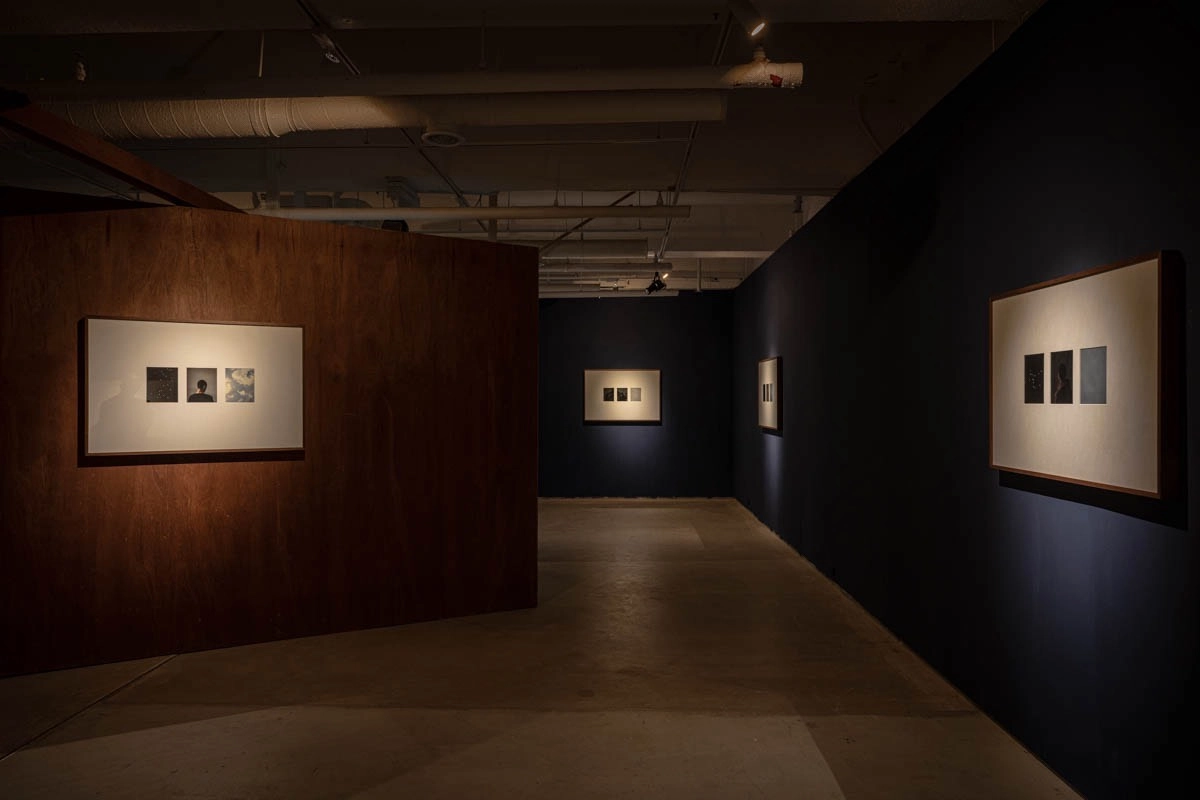
이 작업은 49점의 트립틱 사진 연작으로 구성되어 있다. 49점이 엮인 책을 최종 형태로 염두하고 제작되었으며, 이후 전시를 위해 영상 한 편이 추가 제작되었다.
이 작업은 다음과 같은 과정을 거쳤다. 첫째, 잠에서 깨면 자리를 고쳐 앉고 호흡 명상에 들어간다. 내 몸의 상태, 외부 자극들과 내면의 소리들을 알아차린다. 눈을 뜬다. 둘째, 다시 눈을 감고 숨을 들이쉬고, 쌀을 한 꼬집 탁자 위에 뿌린다. 펼쳐진 모양을 설치해 놓은 카메라로 촬영한다. 셋째, 펼쳐진 쌀의 모양을 바라본다. 그 모양을 바라보며 그 무엇도 읽어내려 하지 않으려고 노력한다. 벽을 마주하고 서서 나의 뒷모습을 설치된 카메라로 촬영한다. 사진이 찍히는 동안 숨을 천천히 뱉는다. 넷째, 그 시각, 창문 밖 정면 하늘의 빛깔과 구름의 모습을 카메라로 촬영한다. 다섯 째, 첫째부터 넷째 까지를 다음날 아침 다시 수행한다.
2020년 3월 국가봉쇄령이 내려지고 수백명 단위의 사망자 숫자가 아침마다 갱신되며 마스크와 휴지, 쌀과 밀가루 공급이 끊긴 뉴욕에서 나는 작업을 시작했다. 49일 간 촬영을 마치고, 모든 사진들을 취합하여 인화하였고, 이후 날들 동안 오리고 접고 꿰매 이들을 엮었다.
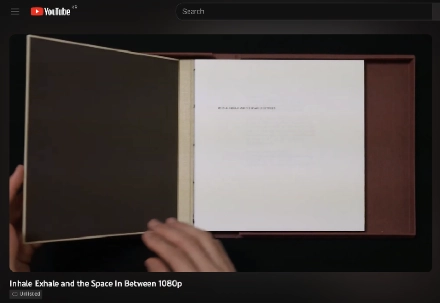
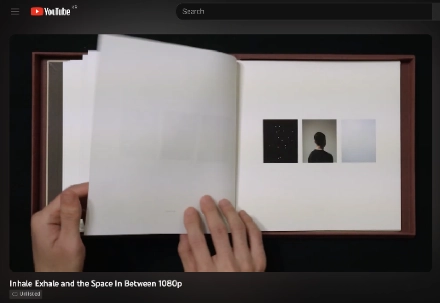
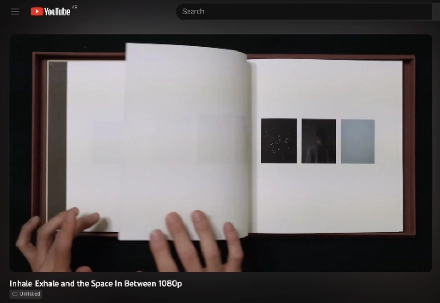
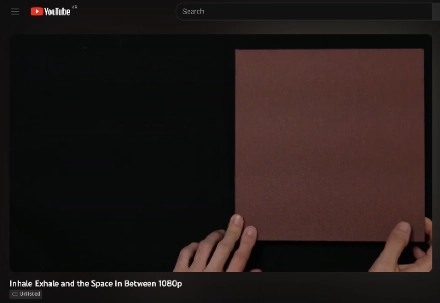
아티스트 북, 아카이빙 영상 스틸컷, 2021
4분 46초 영상
전체 보기 https://youtu.be/iAWuprPZxwY
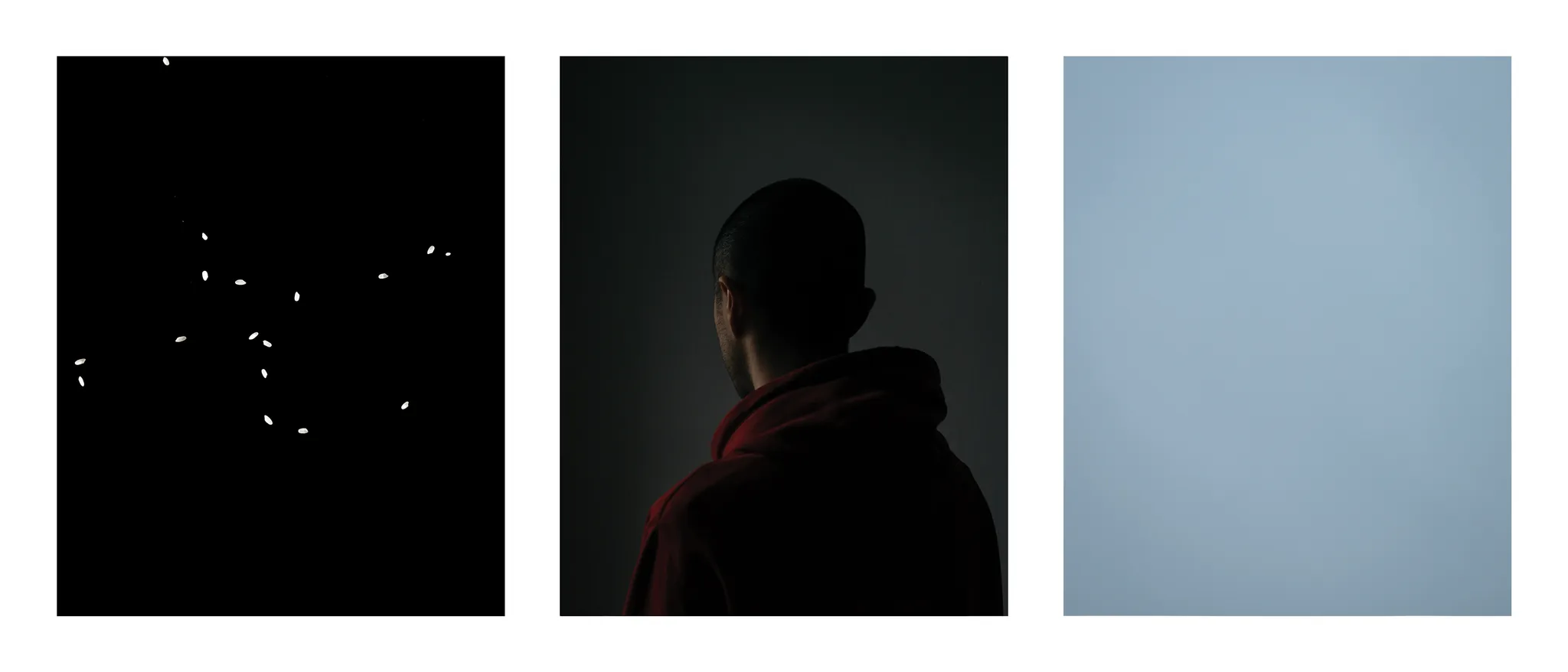
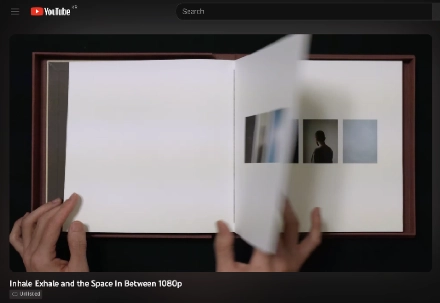
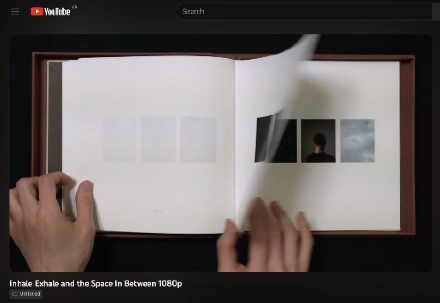
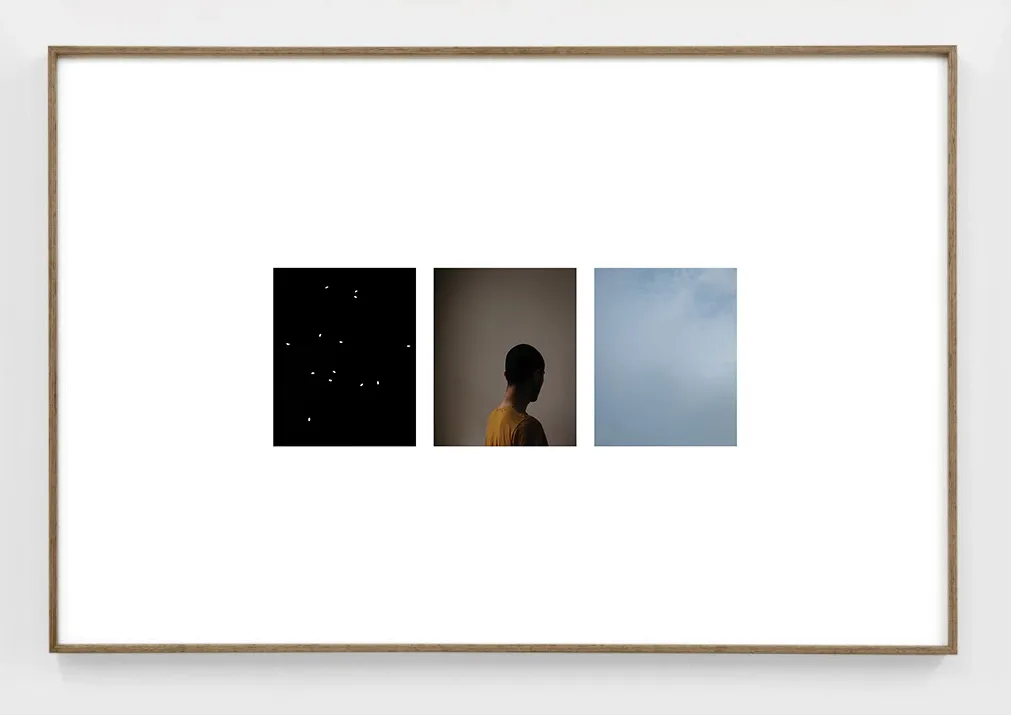
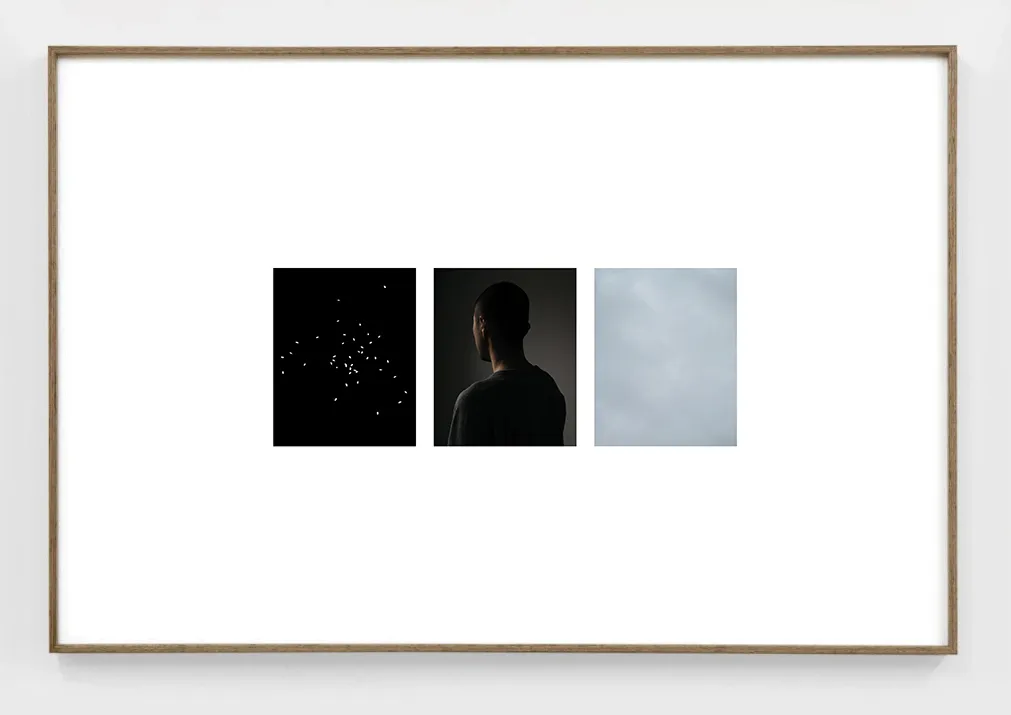
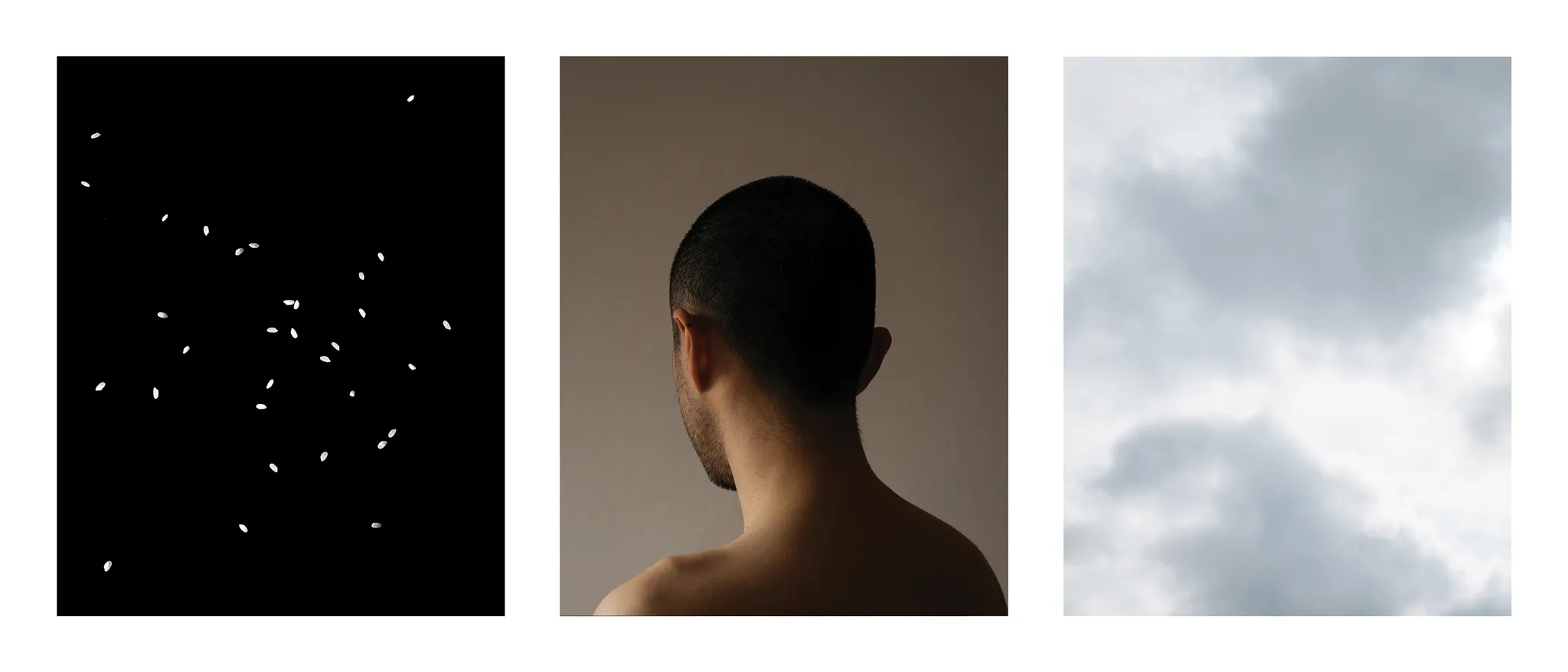
30cm x 30cm 크기의 포슬포슬한 종이책을 열었을 때, 오른쪽 페이지에 촬영된 세 장면이 트립틱으로 놓인다. 쌀과 사람의 뒷모습과 하늘 이미지다. 손바닥 크기의 반도 안되는 사진 속에는 검은 배경에 흰 쌀알들이 놓여있다. 의도적으로 어두운 배경을 선택하여 쌀알의 위치를 쉽게 찾을 수 있게 하였고, 그들이 만드는 모양에서 밤하늘의 별자리를 연상할 수 있도록 하였다. 민속신앙 쌀점과 점성술에는 인간이 자신의 힘 너머의 뜻을 헤아리려하는 공통점이 있다. 반면, 동일한 크기의 사진으로 하늘은 그 시각 내가 전혀 의도할 수 없는 빛과 모양을 가진다. 하늘의 색도, 그날의 습도와 바람의 세기로 만들어지는 구름의 모양도. 시선의 방향 역시 쌀과 하늘은 대조를 이룬다. 쌀은 내려다보며 하늘은 올려다 보아야한다. 쌀이 의도이며 인위이라면, 하늘은 무목적이며 자연이다. 그 둘 가운데 사람의 뒷모습이 있다. 사람이 이 둘을 이으며, 사람으로부터 이 둘의 관계가 생겨난다. 뒷모습은 내가 언제까지고 직접 볼 수 없는 나의 신체 뒷통수, 즉 무의식의 메타포다. 이 세 이미지가 하나의 트립틱을 이루며 책 안에서 49장을 반복한다. 49차례 숨은 뜻을 읽어보려는 심정으로 쌀을 보고, 모든걸 내려놓는 마음으로 하늘을 보고, 그러고있는 자신을 반복하여 볼 수 있는 구조로 만들어져 있다.
들이쉬는 숨과 내쉬는 숨을 느껴보면, 그 사이의 공간이 있다는 걸 알게 된다. 모든 숨을 뱉고 단 몇 초의 공백을 하나의 단계로 인식하면 열리는 생각이 있다. 보는 이들이 주의를 기울여 주길 바라는 곳도 각각의 이미지가 아닌, 그 사이 단계이다.
이 작업은 무엇도 할 수 없었던 팬데믹 상황에 아픈 몸과 마음을 이끌고 무어라도 해야했던 날들의 리츄얼한 기록이며, 혼란과 공포 속에 함부로 방치되고 매립된 사자들을 위한 기도이고, 동시에 이 때 이럴 수 밖에 없는, 불완전하여 불안정한 인간의 어떤 ‘바라봄’을 비추는 거울이다.
49일이란 기간은 티벳 불교에서 생과 사 사이의 ‘바르도’라고 부르는 중간계의 시간이다. 이 일곱 번의 일주일 동안 ‘티벳 사자의 서’라고 불리는 바르도 퇴돌을 망자에게 읽어주게 되는데, 이는 존재의 근원, 본래의 마음 자리가 무엇인지를 깨닫게 하고 자유를 얻을 수 있도록 돕는다고 한다. 2020년 봄, 공포와 혼란, 부딧힘 속에서 비현실적 감각이 팽배했는데, 이 세계가 ‘바르도’가 된 것 같아 이 기간을 하나의 단위로 삼아 작업을 지속하는 동안 가졌던 마음과 생각을 덩어리 지었다.
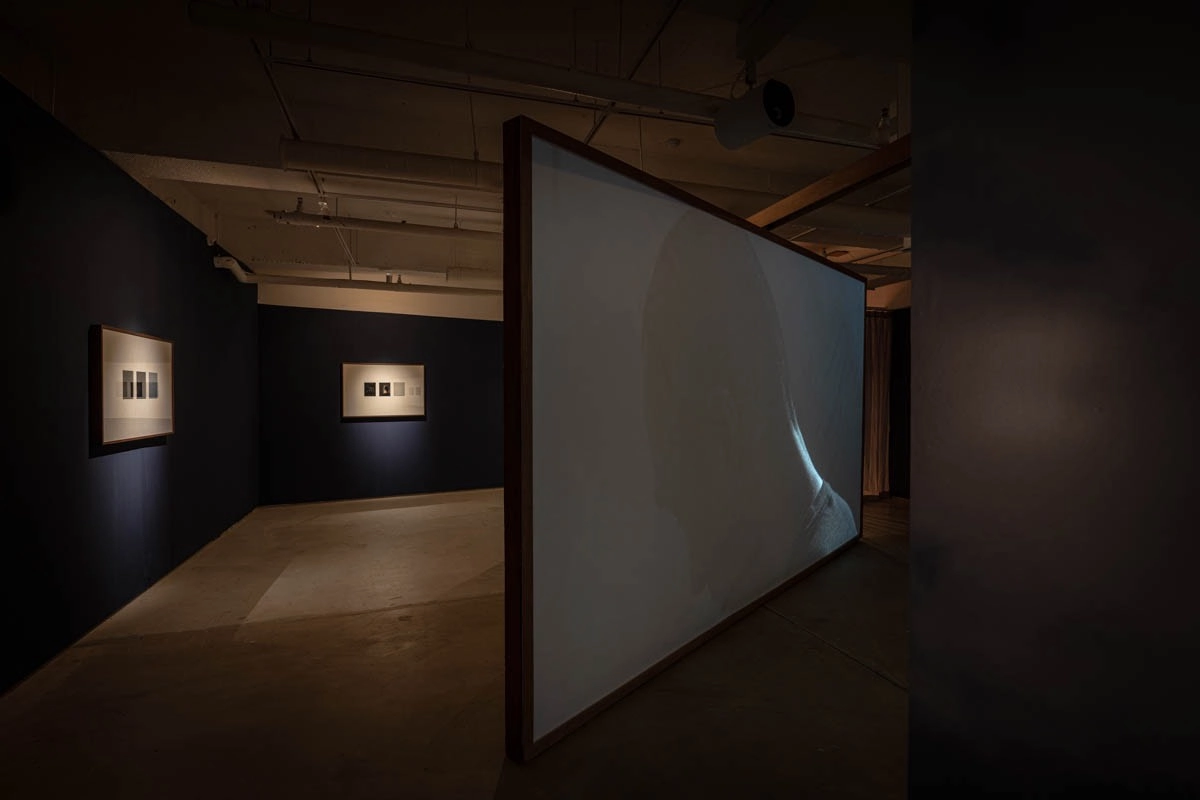
전시에는 작업 기간 중 마음의 화두로 가진 마흔 아홉 개의 물음과 노트, 발췌록이 텍스트 형식으로 명상의 모습과 소소한 명상적 시선들을 교차편집하여 제작한 12분 영상이 함께하였다.
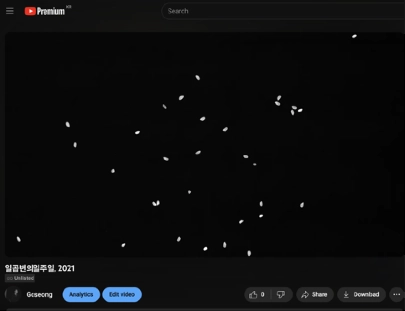
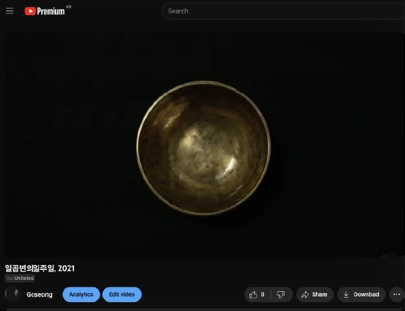
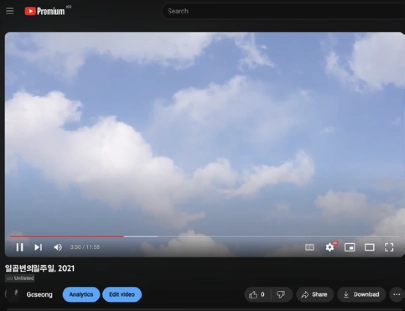
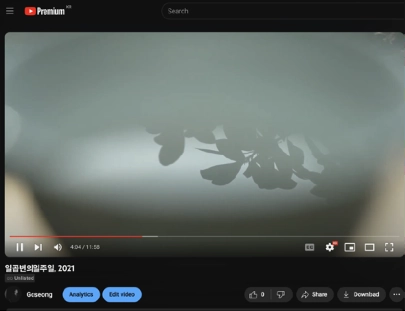
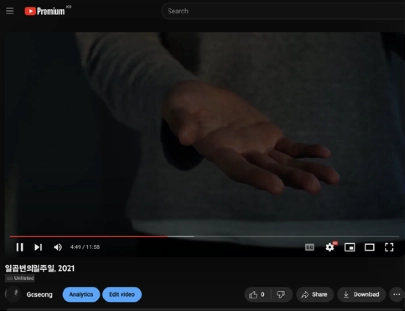
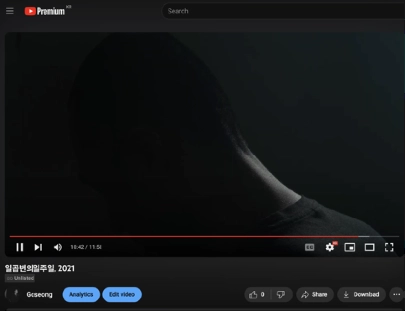
일곱 번의 일주일, 영상, 12분, 2021
전체 보기 https://youtu.be/ItzUocWlPV8
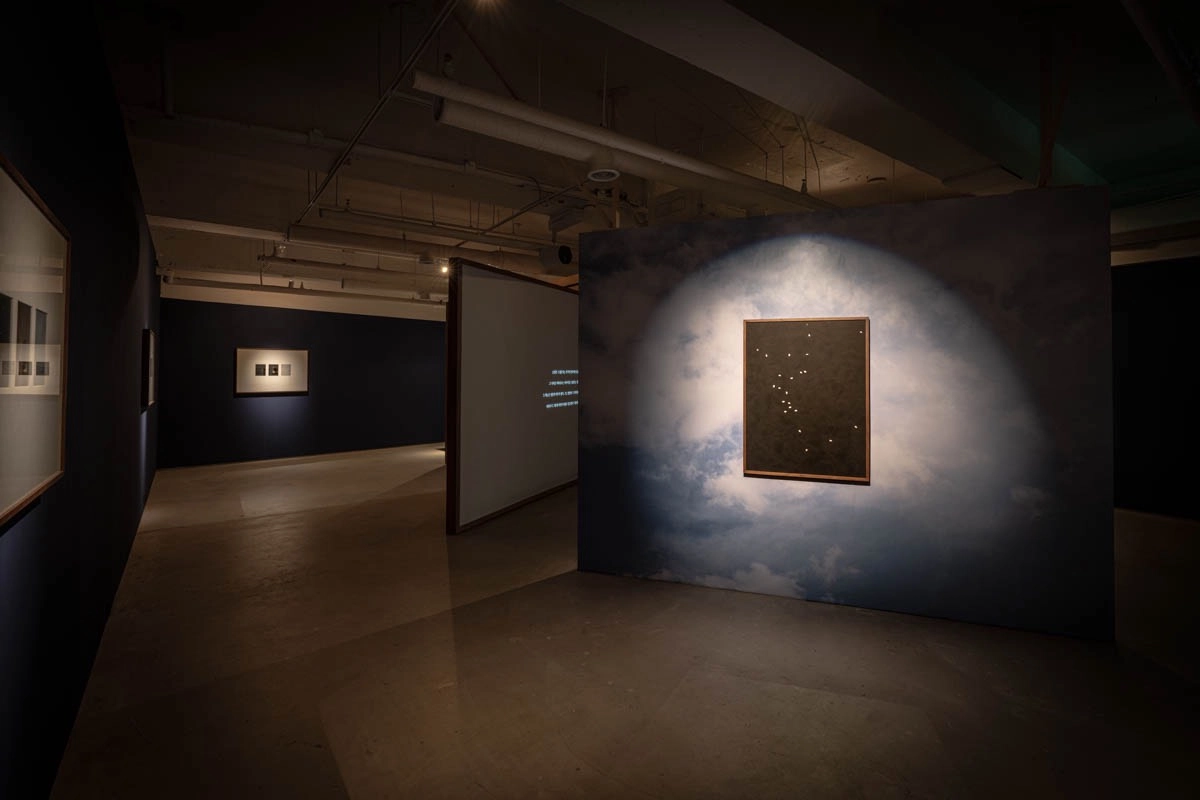
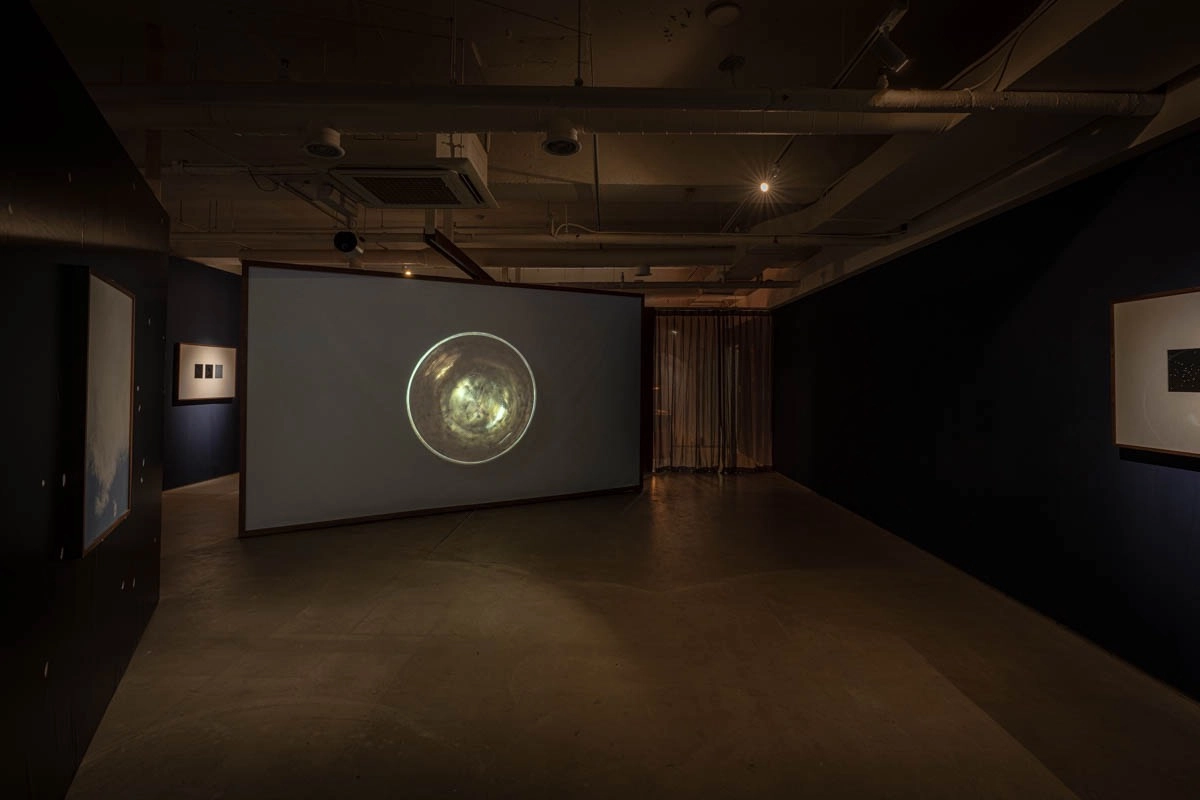
This work consists of a series of 49 triptych photographs. It was conceived as a book containing all 49 pieces, with a video later produced for exhibition purposes.
The work followed this process: First, upon waking, I would sit up and begin breathing meditation. I would observe my body's state, external stimuli, and inner sounds, then open my eyes. Second, I would close my eyes again, take a breath, and scatter a pinch of rice onto the table. I would photograph the scattered pattern with a pre-installed camera. Third, I would contemplate the pattern of the scattered rice, trying not to read any meaning into its shape. Standing with my back to the wall, I would photograph my silhouette with the installed camera while slowly exhaling. Fourth, at that same moment, I would photograph the color and cloud formations in the sky directly outside my window. Fifth, I would repeat steps one through four the following morning.
I began this work in New York in March 2020, when a national lockdown was declared, daily death tolls reached the hundreds, and supplies of masks, toilet paper, rice, and flour ran out. After completing 49 days of photography, I printed all the images and spent the following days cutting, folding, and sewing them into a bound volume.
When the 30cm x 30cm soft paper book is opened, three photographed scenes appear as a triptych on the right page: rice, a person's silhouette, and sky. In these palm-sized photographs, white rice grains rest against a black background. I deliberately chose a dark background to make the rice grains' positions clearly visible and to evoke constellations in the night sky through their patterns. Folk rice divination and astrology share humanity's common desire to discern meaning beyond our own power. In contrast, the sky photographs of identical size capture light and forms completely beyond my intention at any given moment—neither the sky's color nor the cloud shapes formed by that day's humidity and wind. The direction of gaze also contrasts rice and sky: rice is looked down upon while the sky is looked up at. If rice represents intention and artifice, then the sky embodies purposelessness and nature. Between these two stands the human silhouette. The person connects these elements, and from the person emerges their relationship. The silhouette represents the unconscious—the back of my head that I can never directly see. These three images form one triptych, repeated 49 times throughout the book. The structure allows viewers to repeatedly witness themselves: looking at rice with the intention of reading hidden meanings, looking at the sky with a heart that lets everything go, and seeing themselves in this process.
When you feel the breath moving in and out, you discover the space between them. Recognizing those few seconds of emptiness after exhaling completely as a distinct stage opens certain thoughts. What I hope viewers will attend to is not each individual image, but the space between them.
This work serves as a ritual record of days when, with an aching body and mind during a pandemic where nothing could be done, something still had to be done. It is a prayer for the dead who were carelessly abandoned and buried amid chaos and fear, and simultaneously a mirror reflecting a particular human "way of seeing" that is imperfect and unstable because it cannot be otherwise in such times.
The 49-day period represents the time of the intermediate realm called "bardo" between life and death in Tibetan Buddhism. During these seven weeks, the Bardo Thodol, known as the "Tibetan Book of the Dead," is read to the deceased to help them realize the source of existence and the nature of the original mind, thus gaining liberation. In spring 2020, amid fear, confusion, and collision, an overwhelming sense of unreality pervaded everything. As this world seemed to become "bardo" itself, I used this period as a framework to consolidate the thoughts and feelings I carried while sustaining this practice.
The exhibition also featured forty-nine questions, notes, and excerpts that served as spiritual focal points during the work period, presented in text format alongside a 12-minute video that cross-edited meditative postures with subtle meditative observations.